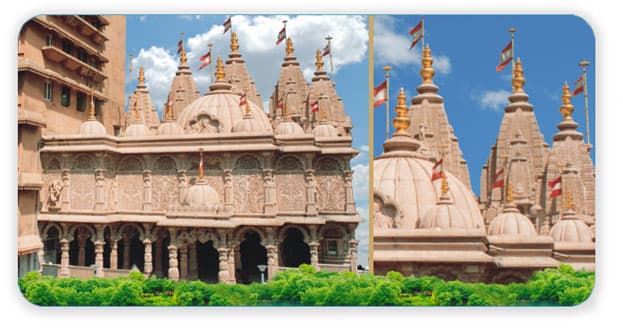
Shri Akshar Purushottam Swaminarayan Temple
A unique three-storeyed Akshar Purushottam Swaminarayan Temple built in Dadar, Mumbai between 1978–1982 under the inspiration of Pramukh Swami Maharaj.

The Story
About This Sacred Structure
A unique three-storeyed Akshar Purushottam Swaminarayan Temple built in Dadar, Mumbai between 1978–1982 under the inspiration of Pramukh Swami Maharaj.
In 1978, Param Pujya Pramukh Swami Maharaj expressed his wish to construct a Shri Akshar Purushottam Swaminarayan Temple at Dadar, Mumbai, reflecting the rich ancient art and cultural heritage of India. Under his guidance and through the efforts of reverent Kothari Swamiji, the responsibility of designing and constructing this temple was entrusted to the Sompura temple architecture tradition. The temple was completed in 1982 for the A. P. Swaminarayan Trust, Mumbai. This impressive structure consists of three levels — a basement, the central main floor, and a first floor — creating a visually striking and spiritually uplifting environment for devotees. The temple stands out among Akshar Purushottam temples in India due to its distinctive architectural pattern. One of its most remarkable features is an innovative structural concept where a pillar is placed freely beneath another pillar through a specially designed bearing system, allowing free circular movement. This rare engineering concept makes the temple a fascinating example of both traditional craftsmanship and architectural ingenuity.
Shri Akshar Purushottam Swaminarayan Temple
Project Overview
- Style
- Traditional Swaminarayan Temple Architecture
- Location
- Dadar, Mumbai
- Year
- 1982
- Duration
- 4 years
- Artisans
- Traditional Sompura Temple Craftsmen
- Material
- Traditional Temple Stone
- Height
- Three Storeys
- Status
- Completed
Gallery
In Every Carved Detail
The Craft
How This Temple Was Built
Every Sompura temple follows a five-stage process rooted in the ancient SHILP Shastra texts — from the first survey of the land to the final sacred consecration.
Primary Material
Traditional Temple Stone
Artisans Involved
Traditional Sompura Temple Craftsmen
Construction Period
4 years
Site & Vastu Analysis
Every project begins with a thorough Vastu analysis — assessing cardinal alignment, soil quality, water table, and the subtle energetic properties of the land.
Sacred Drawing (Rekha)
Master Sthapatis produce hand-drawn plans based on Manasara and Mayamata proportional canons. Every column, shikhara, and doorway follows precise mathematical ratios.
Stone Selection
Stone is chosen based on grain, hardness, and acoustic properties. Sandstone, marble, and granite are assessed at the quarry before transport to the carving yard.
Hand Carving
Hereditary craftsmen carve each panel and deity by hand using traditional tools — chisels, hammers, and adzes passed down through generations of shilpis.
Assembly & Consecration
Stone panels are assembled using traditional dry-joint mortise and tenon connections — no cement. The structure is completed with Prana Pratishtha, the sacred consecration ritual.
More Projects
Related Temples
Start Your Project
Begin Your Sacred Project
Whether you are commissioning a new temple, restoring a heritage structure, or seeking sacred architectural guidance — our masters are ready to listen, advise, and create.