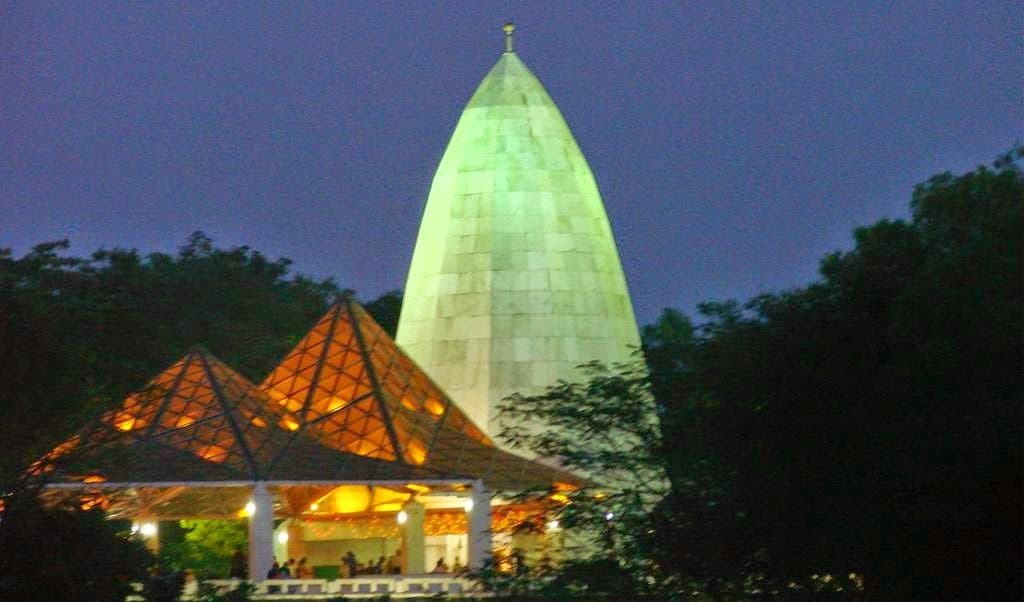
Shree Vikaram Vinayak Mandir
A stunning white marble temple situated atop a hillock overlooking the sea, uniquely blending Eastern architectural heritage with a geodesic dome and space frame engineering.

The Story
About This Sacred Structure
A stunning white marble temple situated atop a hillock overlooking the sea, uniquely blending Eastern architectural heritage with a geodesic dome and space frame engineering.
Located at Salav near Alibaug—a quiet coastal village gently situated where the Kundalika River meanders into the silvery sea—stands the realization of a cherished dream. This idyllic Konkan terrain is home not only to a modern industrial plant vital to the country's economic growth but also to the spiritual vision of Shri Aditya Vikram Birla: the Shree Vikaram Vinayak Mandir. Ascending atop a gentle hillock that overlooks the shimmering sea below, this temple serves as a unified gathering place for deities from different corners of India. Inside, you will find Durga, Radha-Krishna, Shiv-Parvati, and Surya Narayan, all assembled around the central presence of Lord Ganesha. Exquisitely crafted in pristine white marble, the mandir is a remarkable fusion of Eastern architectural heritage and Western engineering principles, distinctly adorned with a geodesic dome and fronted by an intricate space frame. Shree Vikaram Vinayak Mandir acts as a spiritual beacon—a heaven of peace, serenity, and inner sanctuary for those seeking worship and meditation. It is, as beautifully envisioned, a true meeting ground of the Gods in Salav.
Shree Vikaram Vinayak Mandir
Project Overview
- Style
- Fusion of Eastern Heritage and Western Engineering
- Location
- Alibaug, Maharashtra
- Year
- 1998
- Duration
- 2 years (1996-1998)
- Artisans
- Traditional & Modern Craftsmen
- Material
- White Marble
- Height
- Geodesic Dome
- Status
- Completed
Gallery
In Every Carved Detail
The Craft
How This Temple Was Built
Every Sompura temple follows a five-stage process rooted in the ancient SHILP Shastra texts — from the first survey of the land to the final sacred consecration.
Primary Material
White Marble
Artisans Involved
Traditional & Modern Craftsmen
Construction Period
2 years (1996-1998)
Site & Vastu Analysis
Every project begins with a thorough Vastu analysis — assessing cardinal alignment, soil quality, water table, and the subtle energetic properties of the land.
Sacred Drawing (Rekha)
Master Sthapatis produce hand-drawn plans based on Manasara and Mayamata proportional canons. Every column, shikhara, and doorway follows precise mathematical ratios.
Stone Selection
Stone is chosen based on grain, hardness, and acoustic properties. Sandstone, marble, and granite are assessed at the quarry before transport to the carving yard.
Hand Carving
Hereditary craftsmen carve each panel and deity by hand using traditional tools — chisels, hammers, and adzes passed down through generations of shilpis.
Assembly & Consecration
Stone panels are assembled using traditional dry-joint mortise and tenon connections — no cement. The structure is completed with Prana Pratishtha, the sacred consecration ritual.
More Projects
Related Temples
Start Your Project
Begin Your Sacred Project
Whether you are commissioning a new temple, restoring a heritage structure, or seeking sacred architectural guidance — our masters are ready to listen, advise, and create.