Akshardham Memorial
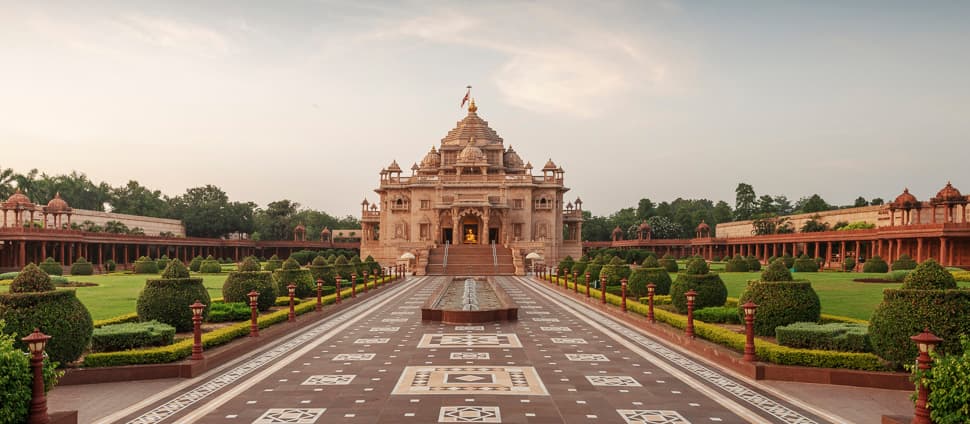
Akshardham Memorial in Gandhinagar, inaugurated in 1985, is a monumental stone temple inspired by Pramukh Swami Maharaj and built entirely without steel using traditional Indian temple architecture.

The Story
About This Sacred Structure
Akshardham Memorial in Gandhinagar, inaugurated in 1985, is a monumental stone temple inspired by Pramukh Swami Maharaj and built entirely without steel using traditional Indian temple architecture.
Inspired by Param Pujya Pramukh Swami Maharaj, the stone-laying ceremony of Akshardham at Gandhinagar was performed in 1979 and the grand memorial was completed and inaugurated in 1985 for the A. P. Swaminarayan Trust. The monument has since become one of the most remarkable destinations for pilgrims, tourists, and admires of temple architecture. The complex covers an area of approximately 33,000 sq. ft., measuring about 200 feet in length and 131 feet in breadth. The structure consists of multiple levels including a basement, ground floor, second floor, and third floor, each richly decorated with intricate carvings and artistic stone craftsmanship. Rising to a height of 108 feet, the edifice features a majestic dome of about 35 feet in diameter and numerous finely carved pillars, balconies, and windows that showcase the brilliance of traditional Indian temple artistry. Massive stone beams weighing nearly five metric tons and measuring about 20 feet in length were used in its construction, along with uniquely designed cantilevered steps extending up to 60 feet. A distinctive feature of the temple is that no steel has been used in the entire structure. The circular pathway known as the Pradakshina Path is laid with red Bansi Paharpur stone, while the main temple structure is constructed using pink Bansi Paharpur stone. Akshardham stands today as a grand memorial celebrating the universality, spiritual richness, and cultural grandeur of Indian civilization, attracting tens of thousands of visitors every month from across India and the world.
Akshardham Memorial
Project Overview
- Style
- Traditional Swaminarayan Temple Architecture
- Location
- Gandhinagar, Gujarat
- Year
- 1985
- Duration
- 7 years
- Artisans
- Traditional Sompura Temple Craftsmen
- Material
- Pink Bansi Paharpur Stone
- Height
- 108 ft
- Status
- Completed
Gallery
In Every Carved Detail
The Craft
How This Temple Was Built
Every Sompura temple follows a five-stage process rooted in the ancient SHILP Shastra texts — from the first survey of the land to the final sacred consecration.
Primary Material
Pink Bansi Paharpur Stone
Artisans Involved
Traditional Sompura Temple Craftsmen
Construction Period
7 years
Site & Vastu Analysis
Every project begins with a thorough Vastu analysis — assessing cardinal alignment, soil quality, water table, and the subtle energetic properties of the land.
Sacred Drawing (Rekha)
Master Sthapatis produce hand-drawn plans based on Manasara and Mayamata proportional canons. Every column, shikhara, and doorway follows precise mathematical ratios.
Stone Selection
Stone is chosen based on grain, hardness, and acoustic properties. Sandstone, marble, and granite are assessed at the quarry before transport to the carving yard.
Hand Carving
Hereditary craftsmen carve each panel and deity by hand using traditional tools — chisels, hammers, and adzes passed down through generations of shilpis.
Assembly & Consecration
Stone panels are assembled using traditional dry-joint mortise and tenon connections — no cement. The structure is completed with Prana Pratishtha, the sacred consecration ritual.
More Projects
Related Temples
Start Your Project
Begin Your Sacred Project
Whether you are commissioning a new temple, restoring a heritage structure, or seeking sacred architectural guidance — our masters are ready to listen, advise, and create.