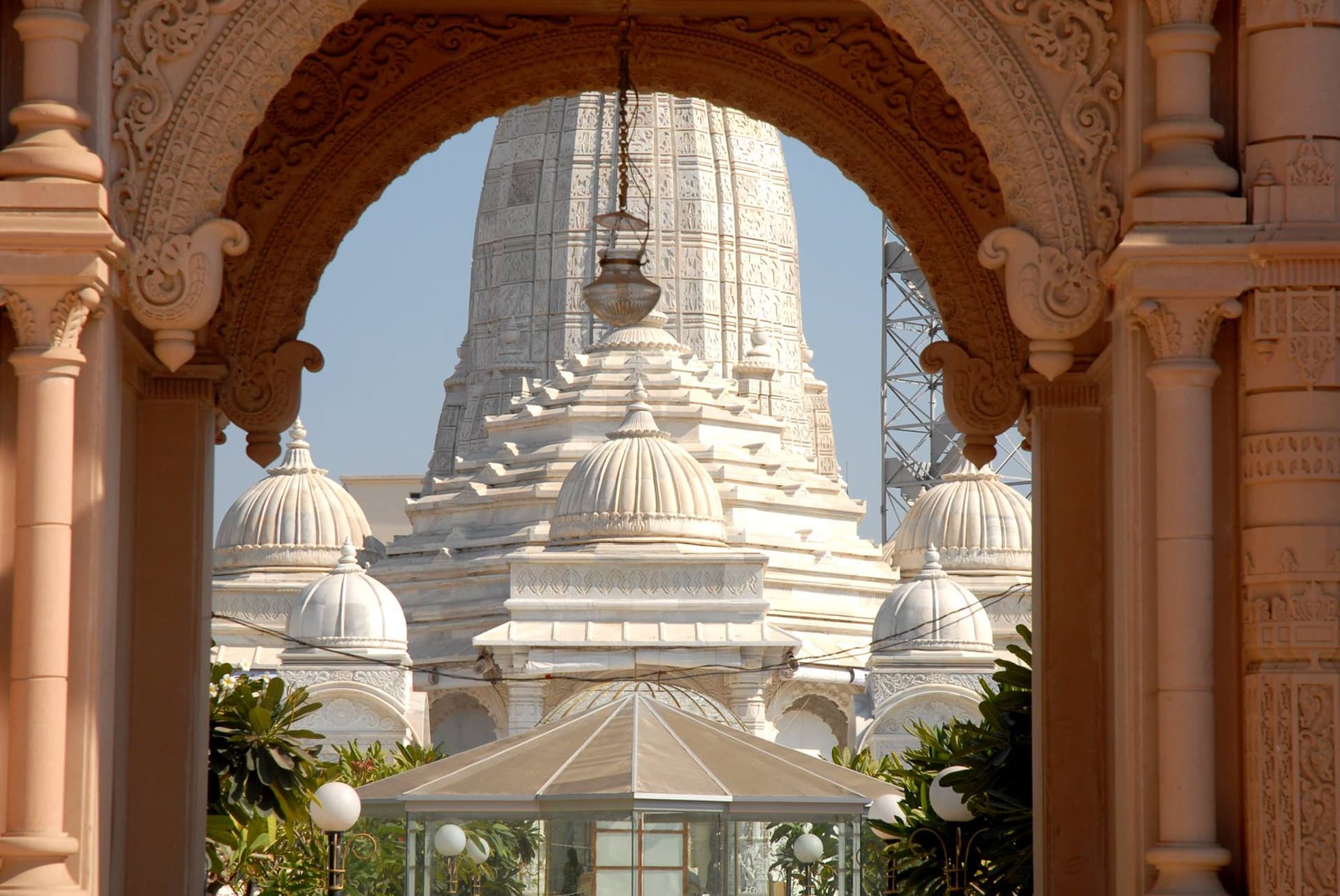
Nand Prabha Prasad
A holy Jain temple located at the foot of Shatrunjay Mountain, renowned for its open, octangular design and unique Chaumukhji Prasad structure.

The Story
About This Sacred Structure
A holy Jain temple located at the foot of Shatrunjay Mountain, renowned for its open, octangular design and unique Chaumukhji Prasad structure.
The holy Jain temple of Nand Prabha Prasad was designed, planned, and constructed at the sacred site of Taleti, at the foot of Shatrunjay Mountain. Located in Palitana, Saurashtra—about 230 kilometers from Ahmedabad—this location is revered as one of the most holy places for followers of Jainism worldwide. Also known as Ashta Prabha Prasad, the architecture of the temple is distinguished by its unique octangular dimensions. A remarkably innovative aspect of the design is that the temple remains open from all sides. Even the Garbh Gruha, the sanctum housing the deity, is not enclosed by solid walls but features only grills, allowing visual openness from all directions. The center of this holy shrine features idols facing all four sides, earning it the renowned name 'Chaumukhji Prasad.' This remarkable creation also holds the distinction of being the first architectural piece of its kind integrated into the Palitana landscape. Its strategic location exactly within the Shatrunjay Taleti offers a comprehensive view of all the surrounding Jain temples, making it both a spiritual marvel and an architectural pioneer.
Nand Prabha Prasad
Project Overview
- Style
- Jain, Ashta Prabha Prasad
- Location
- Palitana, Gujarat
- Year
- 2001
- Duration
- 9 years (1992-2001)
- Artisans
- Traditional Sompura Craftsmen
- Material
- Traditional Stone
- Height
- Octangular Architecture
- Status
- Completed
Gallery
In Every Carved Detail
The Craft
How This Temple Was Built
Every Sompura temple follows a five-stage process rooted in the ancient SHILP Shastra texts — from the first survey of the land to the final sacred consecration.
Primary Material
Traditional Stone
Artisans Involved
Traditional Sompura Craftsmen
Construction Period
9 years (1992-2001)
Site & Vastu Analysis
Every project begins with a thorough Vastu analysis — assessing cardinal alignment, soil quality, water table, and the subtle energetic properties of the land.
Sacred Drawing (Rekha)
Master Sthapatis produce hand-drawn plans based on Manasara and Mayamata proportional canons. Every column, shikhara, and doorway follows precise mathematical ratios.
Stone Selection
Stone is chosen based on grain, hardness, and acoustic properties. Sandstone, marble, and granite are assessed at the quarry before transport to the carving yard.
Hand Carving
Hereditary craftsmen carve each panel and deity by hand using traditional tools — chisels, hammers, and adzes passed down through generations of shilpis.
Assembly & Consecration
Stone panels are assembled using traditional dry-joint mortise and tenon connections — no cement. The structure is completed with Prana Pratishtha, the sacred consecration ritual.
More Projects
Related Temples
Start Your Project
Begin Your Sacred Project
Whether you are commissioning a new temple, restoring a heritage structure, or seeking sacred architectural guidance — our masters are ready to listen, advise, and create.