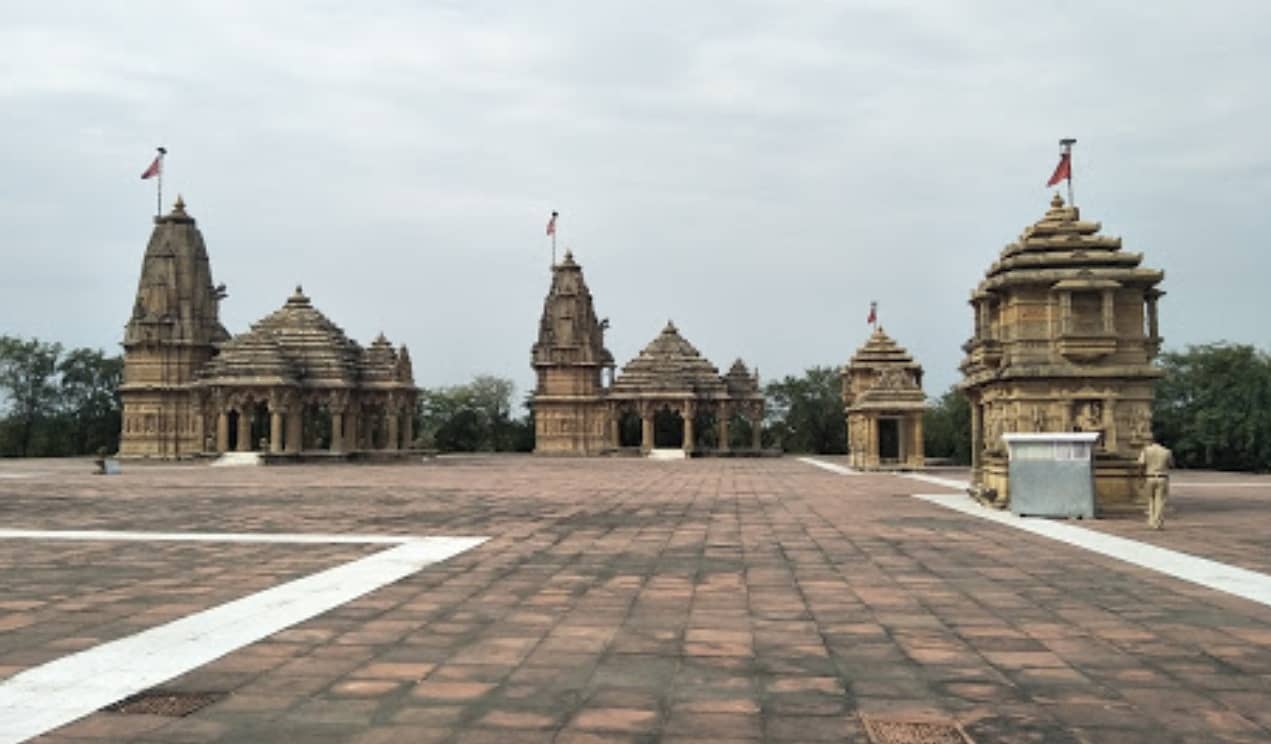
Saptaytan Temple 'A Dharmakshetra'
A sprawling temple complex constructed in a short span of 18 months, featuring seven traditionally carved temples, erected upon an elephant-adorned platform.

The Story
About This Sacred Structure
A sprawling temple complex constructed in a short span of 18 months, featuring seven traditionally carved temples, erected upon an elephant-adorned platform.
This beautiful temple complex in Ratlam, Madhya Pradesh, was commissioned by respected Shri Preranaben Thakre of Jayant Vitamins Ltd. Her vision was to create a "Dharma Kshetra" (field of righteousness) amidst a "Karma Kshetra" (field of activity). Constructed in a miraculously short span of eighteen months between 1990 and 1992, the project comprises seven superb temples, all constructed uniformly using Dhrangadhra stone. Five of the temples feature prominent summits and enshrine the idols of Lord Shiva, Ambaji, Radhakrishna, Ramdarbar, and Lakshminarayan. Two additional decorative shrines house the idols of Hanumanji and Ganpati. The entire temple structure rests on an elevated platform meticulously carved with 3'6" tall elephant motifs. The front of the platform is adorned with beautifully carved 6'0" DEVGANA and goddess idols, depicting various welcoming gestures to the worshippers. This sprawling complex is considered a remarkable, large-scale representation of traditional Hindu temple architecture at a single location.
Saptaytan Temple 'A Dharmakshetra'
Project Overview
- Style
- Traditional
- Location
- Ratlam, Madhya Pradesh
- Year
- 1992
- Duration
- 18 months
- Artisans
- Traditional Sompura Craftsmen
- Material
- Dhrangadhra Stone
- Height
- Temple Complex
- Status
- Completed
Gallery
In Every Carved Detail
The Craft
How This Temple Was Built
Every Sompura temple follows a five-stage process rooted in the ancient SHILP Shastra texts — from the first survey of the land to the final sacred consecration.
Primary Material
Dhrangadhra Stone
Artisans Involved
Traditional Sompura Craftsmen
Construction Period
18 months
Site & Vastu Analysis
Every project begins with a thorough Vastu analysis — assessing cardinal alignment, soil quality, water table, and the subtle energetic properties of the land.
Sacred Drawing (Rekha)
Master Sthapatis produce hand-drawn plans based on Manasara and Mayamata proportional canons. Every column, shikhara, and doorway follows precise mathematical ratios.
Stone Selection
Stone is chosen based on grain, hardness, and acoustic properties. Sandstone, marble, and granite are assessed at the quarry before transport to the carving yard.
Hand Carving
Hereditary craftsmen carve each panel and deity by hand using traditional tools — chisels, hammers, and adzes passed down through generations of shilpis.
Assembly & Consecration
Stone panels are assembled using traditional dry-joint mortise and tenon connections — no cement. The structure is completed with Prana Pratishtha, the sacred consecration ritual.
More Projects
Related Temples
Start Your Project
Begin Your Sacred Project
Whether you are commissioning a new temple, restoring a heritage structure, or seeking sacred architectural guidance — our masters are ready to listen, advise, and create.